
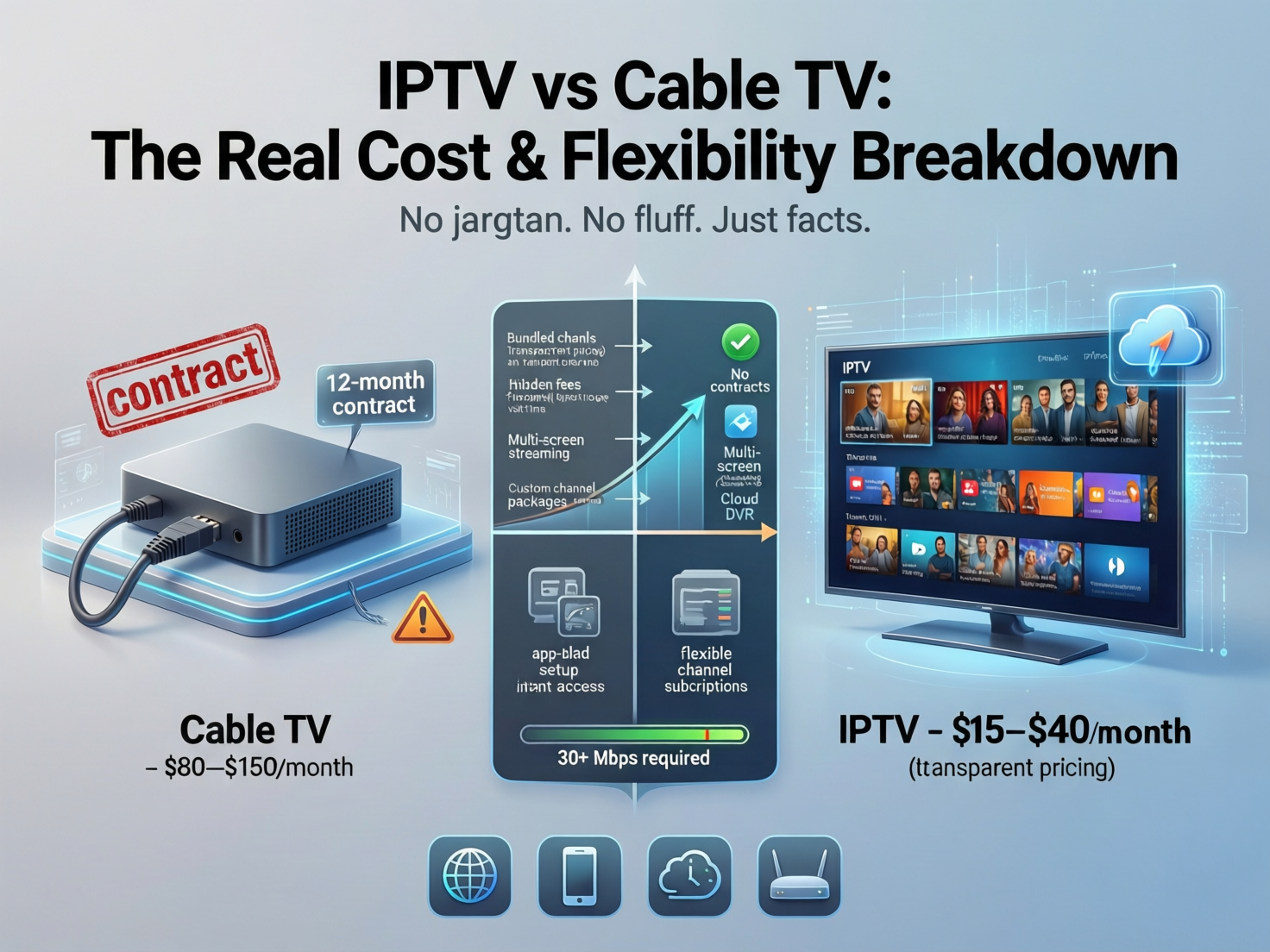
Tired of sky-high cable bills and rigid channel bundles? You’re not alone. The IPTV vs Cable TV debate is reshaping living rooms worldwide. IPTV (Internet Protocol Television) streams content directly over your internet connection, while cable TV relies on physical coaxial infrastructure. Both deliver entertainment—but in fundamentally different ways. In this clear, unbiased comparison, we break down costs, flexibility, content, and real-world usability to help you decide what truly fits your lifestyle. No jargon, no fluff—just facts.
What Is IPTV? Beyond the Buzzword
IPTV isn’t just “streaming.” It’s a dedicated television service delivered via your broadband connection. Unlike YouTube or Netflix (which are on-demand only), legitimate IPTV services offer:
- Live TV channels (news, sports, global networks)
- Video-on-demand (VOD) libraries
- Time-shifted TV (catch up on shows aired hours or days ago)
- Electronic Program Guides (EPG) for easy navigation
You access it through apps on smart TVs, Fire Sticks, phones, or dedicated set-top boxes. No satellite dish. No technician visit. Just login and watch.
Types of IPTV Services
- Live IPTV: Real-time broadcasts (e.g., CNN, BBC, ESPN)
- VOD IPTV: Movie/series libraries you control
- Hybrid IPTV: Combines live TV + on-demand (most popular today)
What Is Traditional Cable TV?
Cable TV uses coaxial cables wired directly to your home. A provider-installed set-top box decodes signals for your TV. You typically commit to 1–2 year contracts with bundled channel packages (e.g., “Sports Elite,” “Movie Max”). While reliable in signal stability, cable often includes channels you’ll never watch—and fees that surprise you later.
IPTV vs Cable TV: Cost Comparison
Let’s talk numbers. This is where IPTV vs Cable TV differences become stark:
| Feature | Cable TV | IPTV |
|---|---|---|
| Monthly Cost | $80–$150+ (with fees) | $15–$40 (transparent pricing) |
| Equipment Fees | $10–$25/month for DVR/boxes | Often $0 (use your own device) |
| Contracts | 1–2 years common | Month-to-month (usually) |
| Hidden Fees | Broadcast, regional, HD fees | Rare with reputable providers |
Cable bills frequently climb yearly. IPTV subscriptions stay predictable—ideal for budget-conscious viewers.
IPTV vs Cable TV: Content and Flexibility
Channel Variety & Personalization
- Cable: Fixed bundles. Want one channel? You pay for 100+ others.
- IPTV: Many services let you customize channel lineups or choose niche packages (e.g., international, sports-only). Access global content cable rarely offers.
On-Demand & Multi-Screen Freedom
- Cable: Limited VOD; DVR storage caps; watching on mobile often requires extra apps/fees.
- IPTV: Stream simultaneously on TV, tablet, and phone. Pause on one device, resume on another. No DVR needed—cloud recording is standard with quality providers.
IPTV vs Cable TV: Reliability and Setup
Internet Dependency: The Fair Caveat
IPTV requires stable broadband (minimum 25 Mbps recommended). If your internet drops, so does your TV. However:
- Modern IPTV uses adaptive bitrate streaming (adjusts quality to prevent buffering)
- Most households now have robust fiber/cable internet
- Cable isn’t immune to outages (storms, line damage)
Setup Simplicity
- Cable: Schedule installation. Wait for a technician. Mount boxes.
- IPTV: Download an app → enter credentials → watch in <10 minutes. Perfect for renters, travelers, or tech-newbies.
When Cable TV Still Makes Sense
IPTV isn’t universal. Consider cable if:
- Your area has unreliable or slow internet
- You prioritize 100% uninterrupted local broadcast channels (though many IPTV services now include locals)
- You prefer hands-off tech support from a single provider
Making the Switch: A Cord-Cutter’s Checklist
Ready to try IPTV? Do this first:
✅ Test your internet speed (aim for 30+ Mbps for HD)
✅ Choose a legal, reputable IPTV provider (avoid “lifetime subscription” scams)
✅ Use a compatible device: Fire TV Stick, Android TV box, or smart TV app
✅ Start with a short trial (many offer 24–72 hour tests)
✅ Keep your internet router updated for smooth streaming
Conclusion: Which Wins the IPTV vs Cable TV Debate?
So, IPTV vs Cable TV—which is better? For most modern viewers seeking affordability, flexibility, and control, IPTV delivers exceptional value. It eliminates bloated bundles, hidden fees, and rigid contracts while putting you in charge of what, when, and where you watch. Cable retains niche advantages for specific scenarios, but the tide has turned. As internet infrastructure improves globally, IPTV’s convenience and customization make it the smarter choice for forward-thinking households. Evaluate your internet stability and viewing habits—but don’t let outdated assumptions keep you overpaying.
Frequently Asked Questions (FAQs)
Is IPTV legal?
Yes, when provided by licensed services that secure content rights. Avoid unauthorized “free” IPTV streams—they violate copyright laws and risk malware. Always choose providers with clear terms of service and customer support.
How much internet speed do I need for IPTV?
For standard definition: 10 Mbps. For HD: 25 Mbps. For 4K or multiple streams: 50+ Mbps. Run a speed test before subscribing. Wired connections (Ethernet) are more stable than Wi-Fi.
Can I get local channels with IPTV?
Many reputable IPTV services include local broadcast channels (ABC, CBS, FOX, NBC) based on your region. Confirm channel availability with the provider before subscribing.
Does IPTV have DVR capabilities?
Yes! Most quality IPTV services offer cloud DVR—record shows without device storage limits. Recordings are accessible from any device on your account.
Will I lose sports channels switching to IPTV?
Not necessarily. Top IPTV providers offer comprehensive sports packages (including regional networks and PPV events). Verify specific leagues/channels with your chosen provider during trials.
Disclaimer: Always select IPTV services that operate within legal frameworks in your country. This article is for informational purposes to support informed consumer decisions.